Cookster ai app (wip)
Turn any TikTok cooking video into a real, structured recipe.
Have you ever found a great TikTok recipe, but gotten annoyed having to pause, rewind, and jump back through the video just to figure out the ingredients and steps?
My friend Donny Nguyen and I are building the Cookster, a tool that converts TikTok cooking videos into clean, structured recipes you can actually use easily in the kitchen.
This project is still ongoing, so the current work mainly reflects the research, strategy, and early UX direction.
TIME
November 2025 - Present
TEAM
Software Engineer, Designer, Collaborator - Donny Nguyen
tools
Figma
Role
UX/UI Design
Low-Fidelity Prototypes
High-Fidelity Prototypes
Design System
— project overview
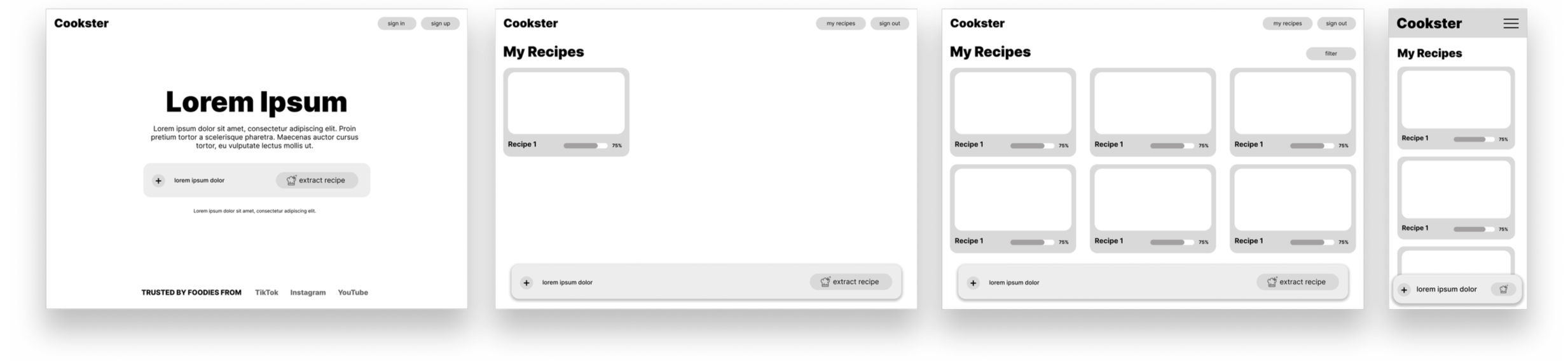
Cookster is a recipe extraction tool that helps people turn short-form cooking videos into structured, easy-to-follow recipes. We are designing the product end-to-end, from research and problem definition to ideation and early interface design. The current app is still in progress, and so far we have developed the initial research direction, low-fidelity prototypes for the core experience, and started building the product.
— problem
How might we help people turn TikTok cooking videos into clear, structured recipes that are easy to follow while cooking?
Short-form cooking videos are great for discovery, but frustrating to actually cook from. Users often have to pause, rewind, and scrub through videos repeatedly just to catch ingredients, measurements, or steps. Important details are frequently buried in captions, comments, or split across multiple parts of the video, making the cooking experience feel messy and inconvenient.
This creates a gap between discovering a recipe and successfully using it in the kitchen.
— solution
The Cookster.
The Cookster explores a simpler workflow: paste in a TikTok cooking video and receive a cleaner, more structured recipe output. Instead of forcing users to keep returning to the original video, the product aims to transform short-form content into something more usable: a recipe with readable steps, ingredient organization, and a format that supports actual cooking.
The goal is to reduce friction and help users move from inspiration to action faster.
process
RESEARCH: To better understand whether this was a real problem worth solving, we looked at both the creator landscape and audience demand in the cooking content space.
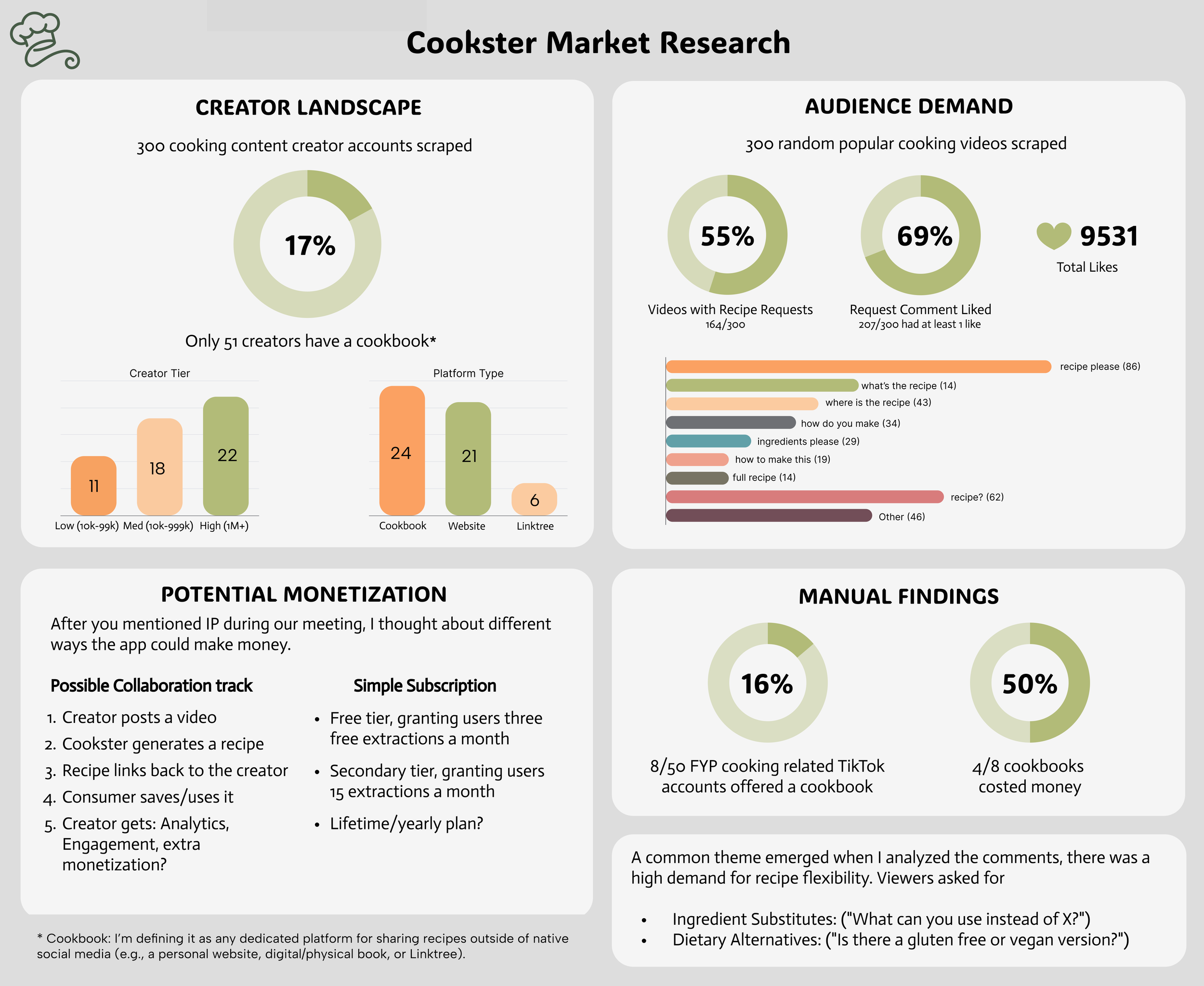
Many cooking creators share recipes through short-form video, but only a smaller portion provide a dedicated external recipe resource such as a cookbook, website, or link hub.
A large percentage of viewers explicitly ask for the recipe in comments, suggesting that video alone often does not fully meet their needs.
Comment patterns showed repeated requests like “recipe please,” “what are the ingredients,” and “how do you make this,” which reinforced the usability gap.
There is also interest beyond just recipe extraction: people wanted substitutions, dietary alternatives, and more flexibility than the original video format offered.
IDEATION: A simple product direction.
Paste a TikTok link
Extract the recipe
Save it in a personal recipe library
Return to it later in a cleaner format
The concept centered on removing friction from the process. Instead of asking users to manually translate a video into notes, the product would do that organizational work for them.
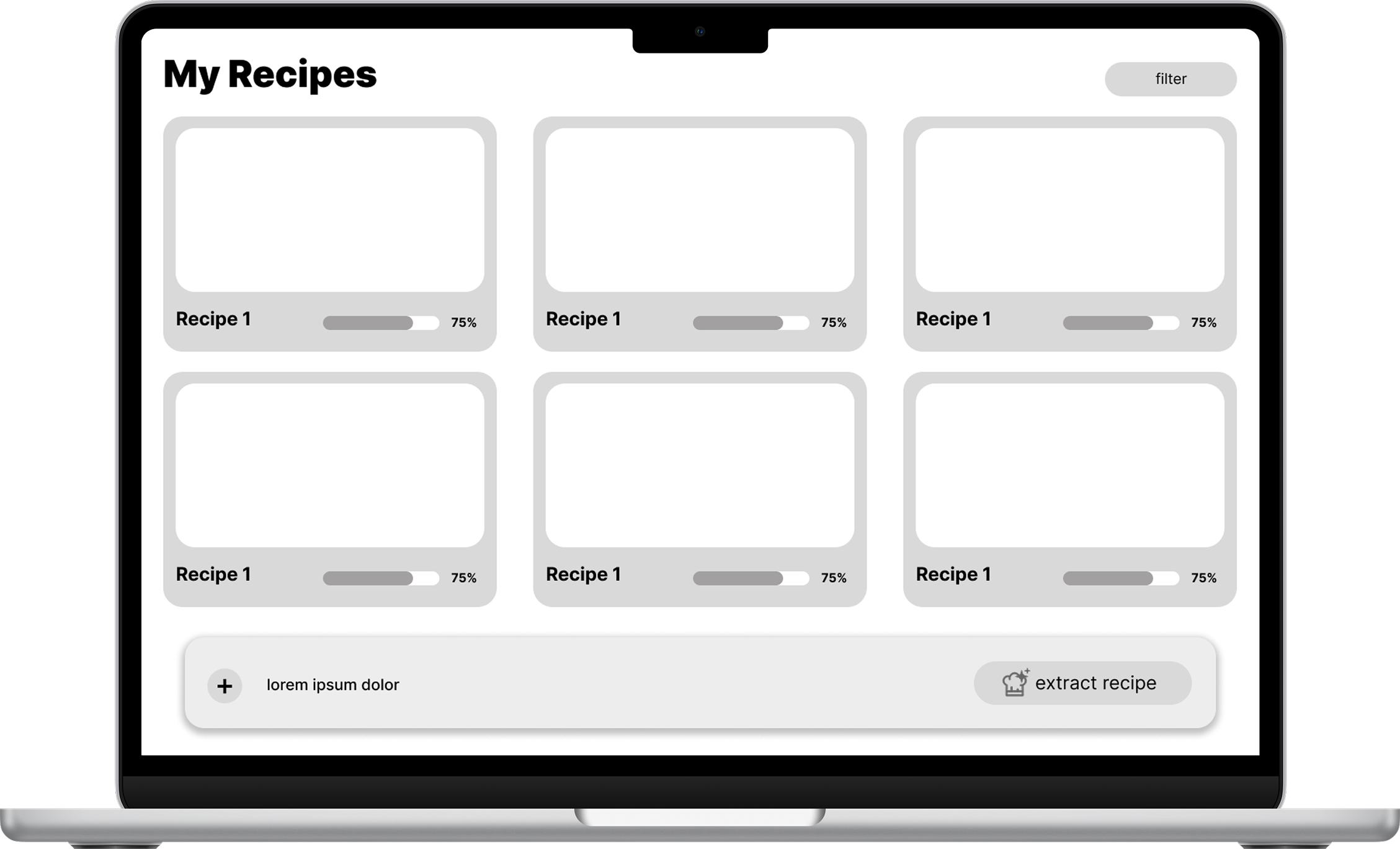
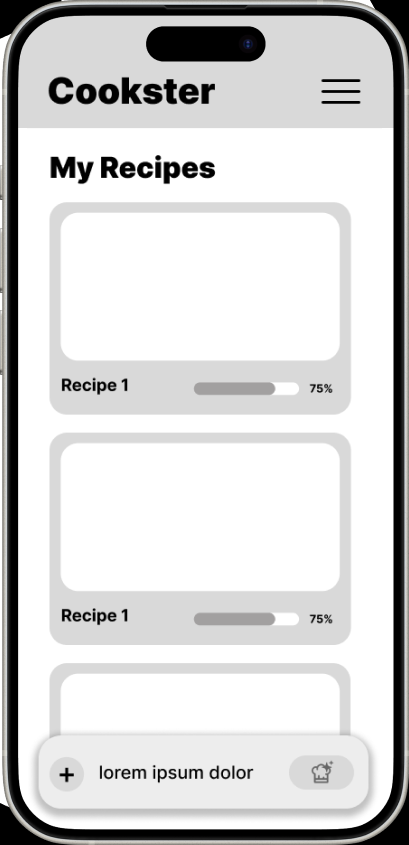
We also began thinking about the recipe library as an important part of the experience, since saved recipes become more valuable over time when users can revisit and manage them easily.
— low-fidelity wireframes